
The Missing Poets

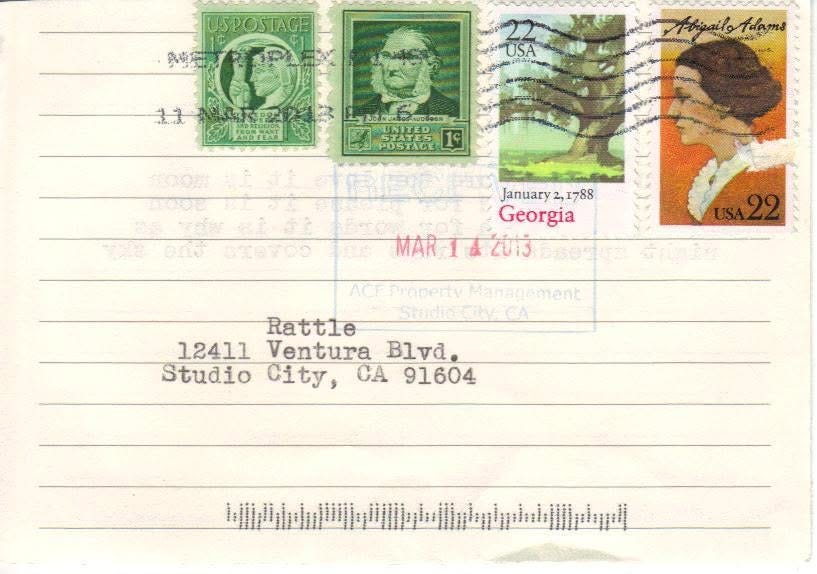
I think often about the missing poets—the ones who appear at our doorstep bearing beautiful gems and then disappear into the night. Some of the best poets of our era learn their craft, say what they needed to say, and then move on to other dreams. When some disappear, it’s more profound and complete, and affects you as an editor.
But few more so than Malcolm Alexander.
Malcolm was a finalist for the 2006 Rattle Poetry Prize, and we published three of his poems back then, including “Beginner’s Lesson.”
A blues guitarist who fell into drugs, he served seven years in the Arizona prison system for related offenses, and found poetry while incarcerated. I assume, though don’t know for sure, that he was one of the many students of Richard Shelton, who did so much great work helping people rehabilitate by giving them something to love.
Malcolm would write every few months, and his letters were long, written by hand on yellow paper torn from a legal pad with penmanship so flawless it seemed like font. This is common among prisoners, who have so much time and such a yearning for connection.
A year or two later he said that he was getting out, and he was afraid of leaving. The thought of being responsible for the roof over his head and the food in his belly was filling him with anxiety. He worried that, when they released him, he might hot-wire the first car he saw so they’d send him back. Prison is better than vacation for a poet, he said, I should try it.
But he didn't go back. Instead he got a job in construction, and the letters stopped coming—until finally one last letter did arrive in a thin envelope, just a few paragraphs of printed text explaining that he’d had an accident on the job and suffered a traumatic brain injury.
When he woke up in the hospital, his interest in poetry was gone. He couldn’t write it, couldn’t read it. He couldn't explain why, he just didn’t hear the music anymore. He was sad that he’d never write a book, but also not sad. He knew the old version of himself, the prison version, would have been sad, but he was surprised he didn’t care.
I hope I’m remembering the details correctly. I still have a few of his letters in a drawer at the Rattle office, but I couldn’t find that last one.
Malcolm was an excellent poet. Most poets from prison write what amounts to bad rap or overly archaic formal verse, but Malcolm fully embraced contemporary poetry and was insightful and imaginative.
Ten years ago, he joined Facebook, posted a few photos, added me as a friend, then disappeared again. He was working as a cook at the time. His wall since then is a few people wondering where he is and hoping he’s well. I’ve checked the obituaries and arrest records, but there’s no sign of him anywhere online.
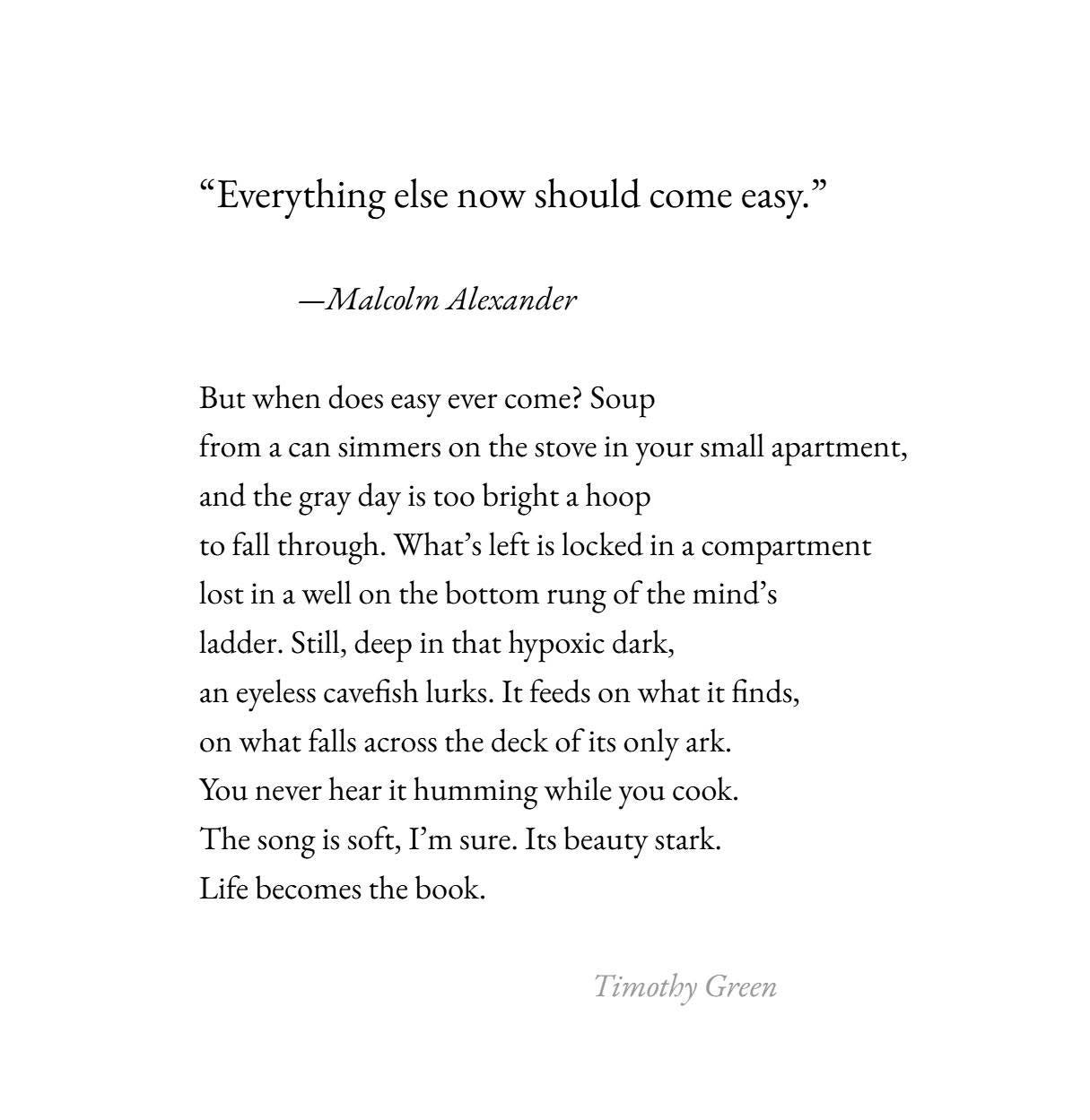
Katie’s Rattlecast prompt for this week was to write a poem that includes a line from a finalist poem from the year you discovered Rattle. The Rattle Poetry Prize didn’t exist when I discovered the magazine, of course, so I had to use the first year.
[Sidenote: This year’s Rattle Poetry Prize deadline is actually midnight tonight!]
My poem after and for Malcolm is a variation on the curtal sonnet. The alliterative verse poems I’ve been writing lately made me want to experiment more with a looser accentual meter, so there are five stresses per line, but syllables clamber in between.
The title is Malcolm's last published line, as far as I know.
I've read the 3 poems on Rattle. It is true, he had a gift. Thanks for sharing this wonderful poem.
this is great !